Ebike configuration in a purchasing review environment

Purchasing by intended use

Ebike wholesale requirements for your buyer channel

Translate the operating context into a bicycle specification before comparing factory responses. Retail, fleet, facility and development buyers can share a product family while needing different component and service scope.

Describe your application

Four channels, four specification questions

Retail assortment

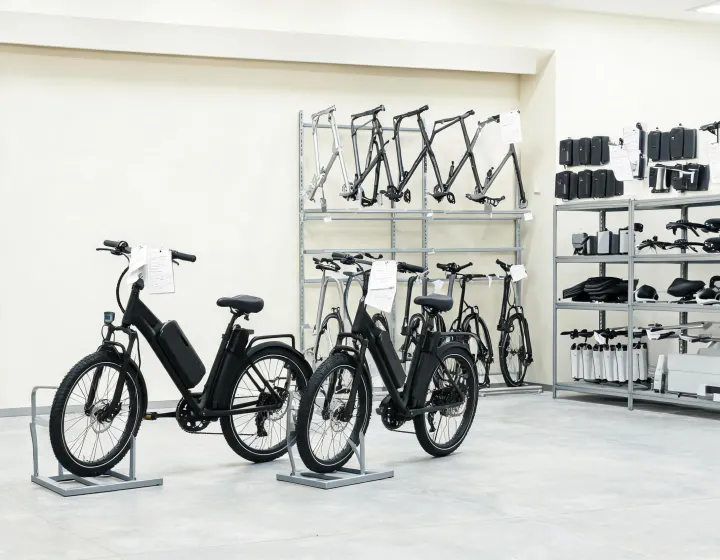
How will frame sizes, colors and display units be allocated? Ask for quantities by variant, pack ratio and assembly preparation rather than one mixed total. Identify which chargers, manuals and accessories belong to each complete bicycle, and request replacement-part terms separately.

Team or fleet purchasing

What rider group and duty pattern must the proposal address? Define route surface, storage and charging arrangements, requested rated load and maintenance access. Request stated evaluation conditions instead of treating a range figure as a fleet outcome. Charging and transport questions depend on the actual battery system.

Facility programs

Who assembles, checks and maintains the bicycles after delivery? Give the delivery access, receiving arrangements, storage constraints and intended use. Confirm whether setup tools, spare components, manuals and handover support are quoted. A packed bicycle shipment does not automatically include installation or training.

Product development

Is the request a finish change, an adaptation of an existing platform or a new custom frame? Freeze geometry, mounting interfaces and the battery enclosure drawing revision. Ask how tooling charges, sample iterations and change approval are handled before combining development costs with production-unit prices.
Advance the evidence one level at a time

  1. Stated requirement: record dimensions, requested motor/controller W and V, battery capacity, brake system and quantities. Values here are buyer requests.
  2. Document review: request model-linked specifications, component identification and exact-item test evidence where applicable. A family-level reference does not prove the particular bicycle.
  3. Sample check: define conditions, record measurements and component identity, and compare to the approved drawing. A related sample leaves differences unresolved.
  4. Order confirmation: tie accepted configuration, packaging, carton dimensions and delivery scope to the quotation revision. Ask how deviations will be communicated.

Low unit cost and total purchasing cost can diverge when chargers, samples or freight are excluded. Standard components may reduce complexity; custom geometry may serve a specific need while adding tooling and approval work. Neither route is a universal choice.

The frame evidence pack supports these decisions; sourcing coordination keeps the open questions visible.